How long does it take to ramp an SDR?
A new SDR takes 2–4 months to become fully productive, with full ramp typically at month 3–4. The first 6 weeks are spent learning the product, ICP, and tools. Months 2–3 involve building and testing the outreach playbook.
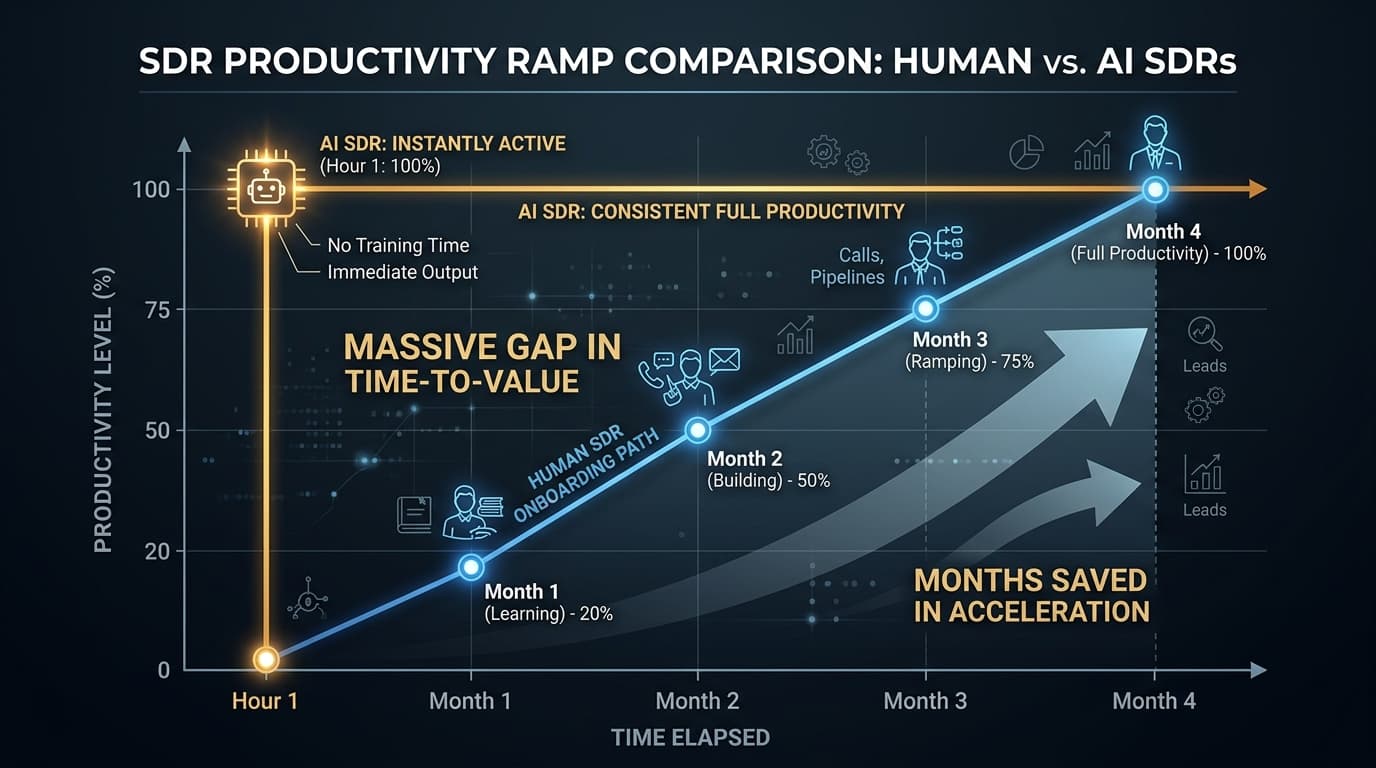
A new SDR typically takes 2–4 months to reach full productivity. The majority hit their ramp quota by month 3–4. Month 1 is almost entirely learning — the product, the ICP, the tools, the process. Meaningful outbound output doesn't start until month 2.
What happens each month of SDR ramp?
Month 1: Onboarding, product training, ICP familiarisation, tool setup. Minimal prospecting output. The SDR is consuming information, not producing pipeline.
Month 2: First sequences launched. Learning what works through trial and error. Reply rates are low — the SDR is still figuring out the message. Some meetings booked, mostly from luck or warm leads.
Month 3: A pattern starts to emerge. Enough reply data to tighten the ICP, cut the messages that aren't working, and lock in the ones that are. Pipeline generation starts looking consistent. This is when most SDRs hit their ramp quota target.
Month 4+: Full productivity. The SDR knows the playbook, executes it independently, and starts developing their own refinements.
What drives a longer ramp time?
No documented playbook is the biggest one. If the SDR has to figure out the ICP and messaging from scratch, ramp stretches. Companies that hand a new SDR a tested, documented playbook on day one consistently see faster ramp times.
Product complexity is the second factor. Technical products with multiple use cases and buyer personas take longer to learn. The SDR needs to know enough to qualify, handle objections, and position the right angle for the right persona — that takes time.
Long sales cycles break the feedback loop. If the SDR's booked meetings don't convert for 60–90 days, they can't improve their approach in months 1–2. They're flying blind on whether the quality is there.
The fastest way to shorten SDR ramp time
Hand them a tested playbook on day one. A documented ICP, validated messaging sequences, and written objection responses removes the guesswork from month 1 entirely. The SDR doesn't discover what works — they execute what's already been proven. Running AI outbound before you hire your first SDR means your new SDR inherits a live, documented motion instead of starting from a blank slate.
AI SDR vs human SDR: ramp comparison
An AI SDR is operational within 60 minutes of onboarding. The entire "ramp" is configuring the ICP and messaging — a 15–30 minute process. First outreach cycle runs the same day. No month 1 of learning. No month 2 of trial-and-error. The agent runs the configured motion immediately, and performance improves as reply data accumulates across cycles.