AI SDR vs human SDR: ramp time, cost, and output compared
AI SDRs and human SDRs both prospect and run outreach, but their cost profiles, ramp timelines, and output characteristics are fundamentally different. Here's a direct comparison across the variables that matter for a hiring decision.
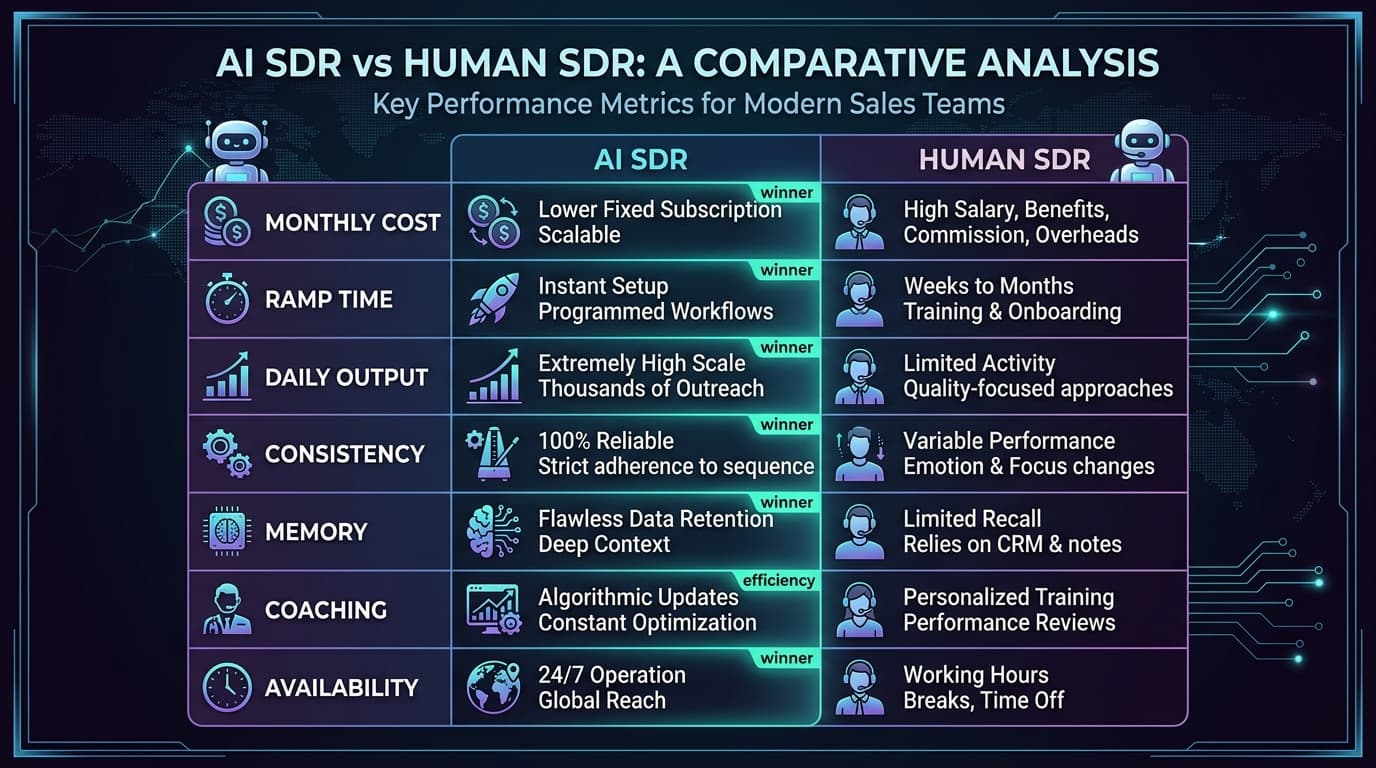
Both an AI SDR and a human SDR do the same core job: find prospects, run outreach, and book meetings. The comparison between them isn't about which is better in the abstract — it's about which profile fits your current situation. The differences in cost, ramp time, and output characteristics are significant.
How do the costs compare?
A junior human SDR costs $55,000–$80,000 per year in base salary alone. Add benefits (20–25%), recruiting fees (15–20% of first-year salary), tools, and management time, and the all-in cost is $80,000–$110,000 per year. An AI SDR costs a fraction of that — typically priced per workspace or per seat at $200–$1,200 per month depending on the platform, with no recruiting cost and no benefits overhead.
The cost comparison becomes more significant when you factor in attrition. Average SDR tenure is 14–18 months. Each departure triggers a new recruiting cycle, another ramp period, and knowledge loss. An AI SDR doesn't quit.
What is the ramp time difference?
A human SDR takes 2–4 months to reach full productivity. The first 6 weeks are spent learning the product, ICP, and tools. Months 2–3 involve building and testing messaging, which means the company absorbs salary while output is below target. At month 4, a well-onboarded SDR is fully productive.
An AI SDR begins executing from day one. Configuration (ICP definition, messaging, sequence structure) takes days, not months. There's no learning curve on tools — the system already knows how to use them. Day 7 output is not meaningfully different from Day 90 output, assuming the brief is good.
Where does human SDR performance exceed AI?
Inbound lead qualification and live conversation handling. A human SDR navigating a real-time phone call — reading the prospect's tone, pivoting in response to unexpected answers, building rapport — does things an AI SDR cannot replicate today. Complex enterprise deals with high-stakes live interaction benefit from human SDRs. High-volume outbound prospecting and sequencing does not.
What about consistency and memory?
Human SDR output varies by week — strong Monday, slow Friday, weaker after a run of bad replies. AI SDR output is flat: same process every cycle. On memory: a human SDR who leaves takes everything they learned about the ICP and what messages work with them. An AI SDR's coaching and memory persists across every future cycle regardless of personnel changes.
Which should you choose?
Both, typically. AI handles the volume prospecting and sequencing. Human AEs handle live conversations and complex deals. The team structure shifts from SDR → AE to AI SDR → human AE, with the human layer focused on the parts of selling that require real-time judgment. If you're weighing when to hire your first SDR at all, that decision deserves its own analysis.