How to negotiate a B2B software contract
Most B2B software buyers negotiate less effectively than they could — either by accepting the first offer or by negotiating on price alone and leaving value on the table. Here's what actually moves in a B2B software negotiation and how to approach it.
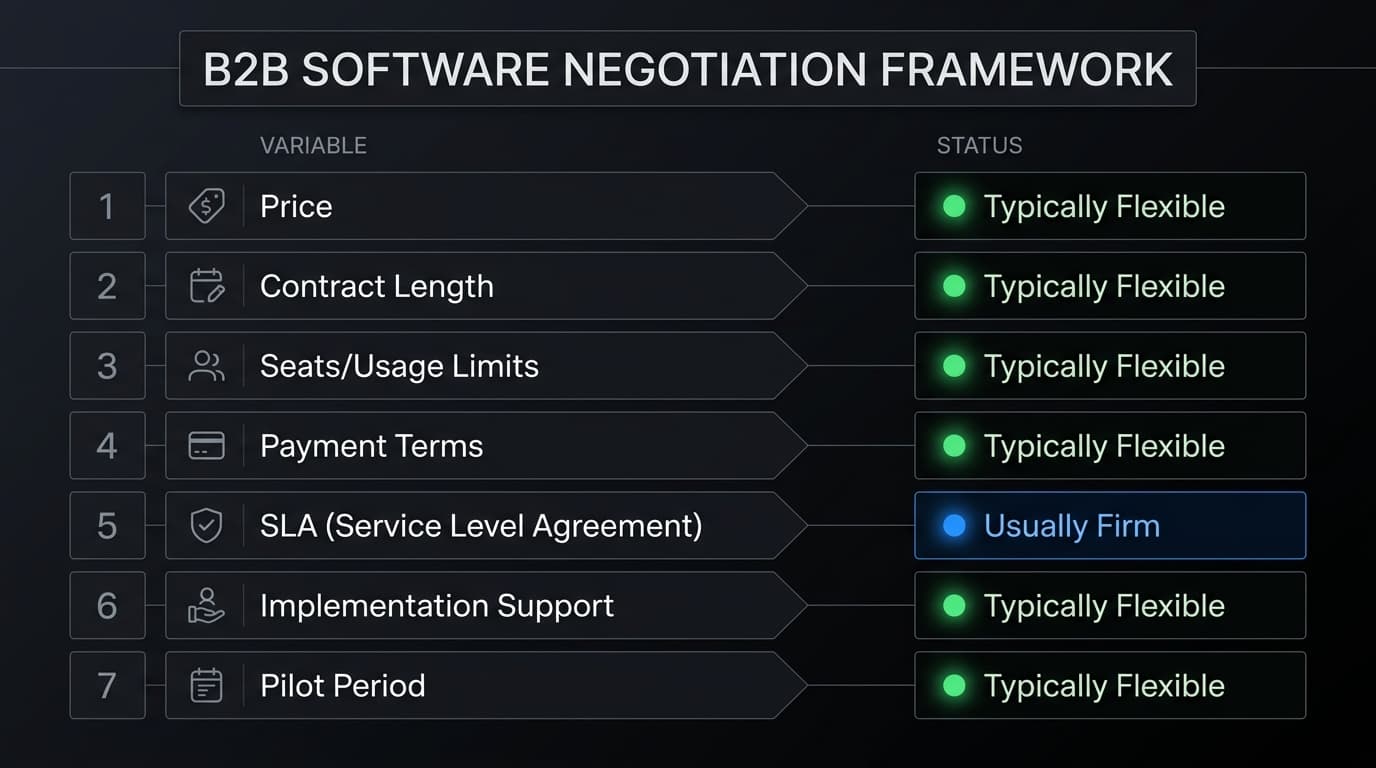
Most B2B software buyers negotiate less effectively than they could — either accepting the list price without pushing, or pushing only on price and ignoring the other variables that have more flexibility. Price is the hardest thing to move in a B2B software negotiation. Contract length, implementation support, payment terms, usage limits, and trial periods are often more flexible and can represent more total value than a 10% discount.
What variables are actually negotiable in a B2B software deal?
Price discount: typically 10–20% available, more at end of quarter when vendors are closing books. Contract length discount: annual contracts typically price lower than monthly; multi-year contracts get larger discounts (15–30%) in exchange for commitment. Implementation or onboarding support: often included free if you ask, charged if you don't. Pilot period: many vendors will offer a 30-day paid pilot at reduced rate or free before a full commitment. Payment terms: net-30 or net-60 instead of payment in advance. Usage limits: additional seats or API calls bundled into the contract. All of these have more margin than the list price.
When is the best time to negotiate?
End of quarter. Software sales teams have quotas with quarterly deadlines. In the last two weeks of a quarter, reps have more flexibility to discount because they're motivated to close. The same deal priced at list in week 2 of a quarter often has 15–20% movement available in week 12. If you're not in a rush, time your buying decision accordingly.
What should you never do in a B2B software negotiation?
Never accept the first proposal without pushing. Even if the price seems reasonable, asking "what flexibility do you have on this?" costs nothing and often produces a better offer. Never negotiate by threatening to walk away unless you actually will — empty ultimatums damage the relationship and usually don't produce movement. And never focus only on price — the vendor has more flexibility on terms, support, and contract structure than on the unit price, because discounting price affects their public pricing while adding services doesn't.
How does negotiation work differently with AI GTM tools?
AI GTM tools are a newer category with less price standardisation than established CRM or marketing automation platforms. This means more negotiating room on everything — vendors are still figuring out packaging and are often willing to customise contracts for early customers who provide good feedback. For early-adopter buyers, ask for founder pricing, reference customer discounts, or an advisory arrangement in exchange for case study participation. These deals create value for both sides and are more available in AI tool negotiations than in mature software categories.