LinkedIn Sales Navigator vs Apollo: which prospecting tool wins?
LinkedIn Sales Navigator and Apollo both help you find B2B prospects, but they're built on different data and suited to different outreach styles. Navigator wins for relationship-based prospecting. Apollo wins for high-volume cold outbound. Here's how to choose.
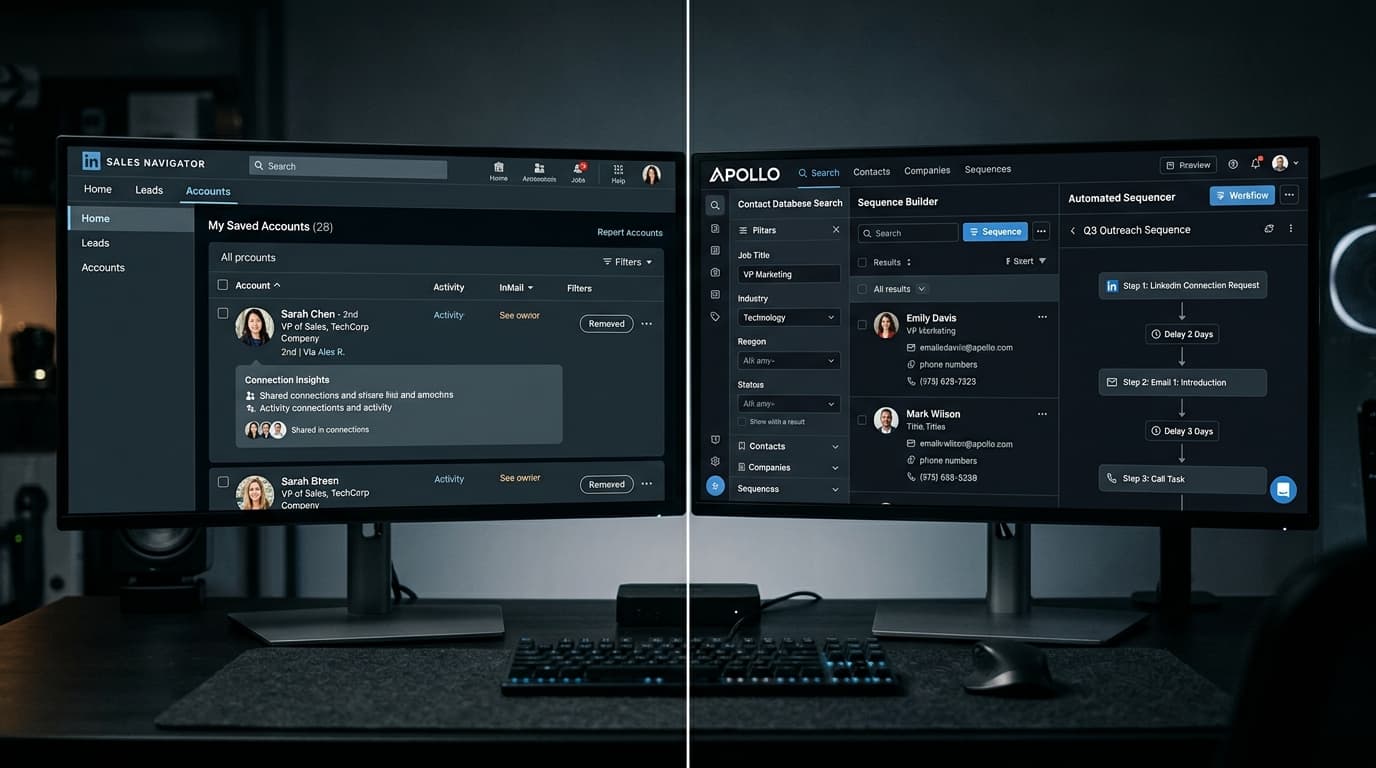
LinkedIn Sales Navigator and Apollo solve the same problem at a surface level — finding B2B prospects — but with different data sources, different strengths, and different use cases. Sales Navigator is best when LinkedIn is your primary outreach channel and relationship signals matter. Apollo is best when you’re running high-volume cold email outbound and need a combined database and sequencer. Choosing the wrong one for your motion wastes both money and time.
What does LinkedIn Sales Navigator do well?
Sales Navigator gives you deep access to LinkedIn’s network data — connections, job changes, company growth signals, shared connections, and real-time updates when a prospect changes roles or gets promoted. The Lead and Account filters are strong. The InMail credits let you reach prospects who aren’t in your network. For sales reps running a account-based selling motion — warm outreach to second-degree connections, account-based prospecting with personalised LinkedIn messages — Sales Navigator is the best tool for the job.
What does Apollo do well?
Apollo has a database of 275M+ B2B contacts with email addresses and direct dials, plus a built-in email sequencer. For a team running cold email outbound — building lists, enrolling prospects in sequences, tracking opens and replies — Apollo does everything in one tool without requiring a separate sequencer. The cost is materially lower than Sales Navigator. For high-volume outbound where email is the primary channel and relationship context matters less than reach, Apollo wins.
Where does each fall short?
Sales Navigator: no email addresses (LinkedIn keeps those private), no built-in sequencer, InMail response rates are declining as the channel gets crowded. It’s a prospecting and relationship intelligence tool, not an outbound execution platform. Apollo: LinkedIn data is limited to what’s publicly available; relationship signals, shared connections, and job change alerts are far weaker than Sales Navigator. Apollo data quality also varies by industry — strong in tech, weaker in traditional sectors.
Can you use both?
Yes, and many high-performing SDRs do. Sales Navigator for account research, identifying champions, and mapping stakeholder relationships. Apollo for building the cold email list and running the outreach sequence. The combination gives you relationship intelligence for personalisation and database scale for volume. The incremental cost is worth it for teams running multi-channel sequences where LinkedIn and email run in parallel.