What is a discovery call? How to run one that actually qualifies
A discovery call is the first substantive sales conversation with a prospect — its job is qualification, not pitching. You're trying to confirm whether this person has the problem, the budget, the authority, and the timeline to buy. Here's how to run one that does that.
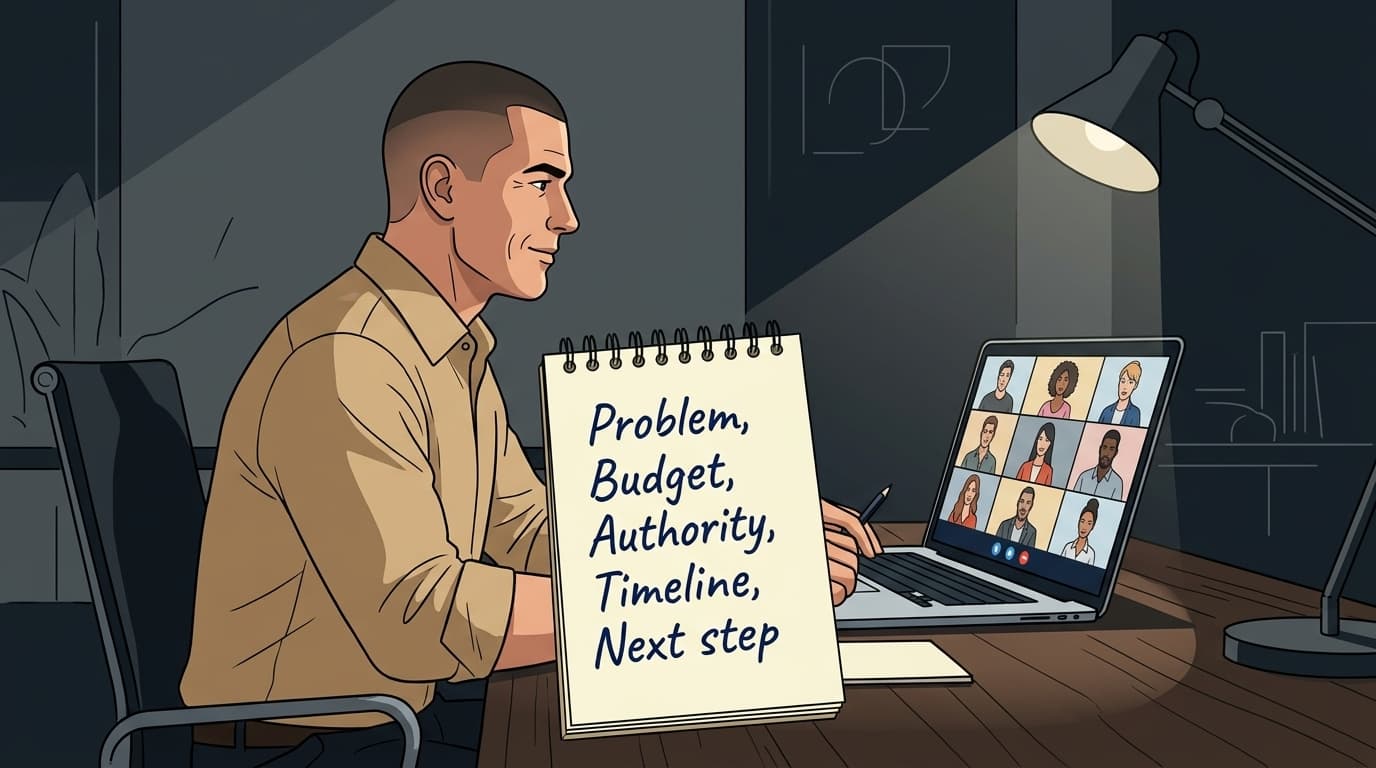
A discovery call is the first substantive sales conversation with a prospect. Its job is qualification — figuring out whether this person has the problem you solve, the resources to pay for a solution, the ability to make a decision, and a reason to do it now. It is not a pitch. The word 'discovery' is accurate: you're gathering information, not delivering it.
What does a discovery call need to accomplish?
By the end of a 30-minute discovery call, you should know five things: (1) what specific problem they're trying to solve, (2) what they've already tried and why it didn't work, (3) who else is involved in the decision, (4) what budget range they're working with or can access, and (5) what happens if they do nothing. That last one is the most important — if there's no real cost to inaction, there's no urgency to buy.
How to structure the conversation
Open with a clear agenda and give the prospect permission to end early if it's not relevant. Something like: "I have about 20 minutes of questions — if it looks like we can help, we'll talk about what that looks like. If not, I'll say so and we won't waste each other's time." That framing lowers defensiveness and makes the whole conversation more honest.
Spend the first 10 minutes on the problem. Don't accept surface answers. "We need better pipeline visibility" is not a problem — it's a symptom. Ask what's causing it, what it's cost them, how long it's been happening. The more specific their answer, the more real the problem is.
Spend the next 10 minutes on context: what they've tried, who else is involved, how decisions like this typically get made at their company. This is where you surface the buying process and the stakeholders you haven't met yet.
Use the last 10 minutes to confirm fit and define the next step. Not "I'll send you a proposal" — that's a way to delay a no. A real next step is a specific meeting with a specific agenda: "If what I just described fits, the next step is a 45-minute call with you and your VP of Sales where we walk through exactly how we'd set this up."
What makes a discovery call fail?
The most common mistake is pitching too early. The rep gets excited about a signal and pivots to product features before they've confirmed the problem is real. Now the prospect is evaluating features instead of discussing their situation, and qualification never happens.
The second failure mode: accepting vague answers. "We're interested in improving our outbound" sounds like qualification — it isn't. Push for specifics: how many reps, what's the current reply rate, what's the cost of not fixing it. Vague interest does not close.
How AI agents change what discovery looks like
When an AI SDR has been running the outreach, the rep walks into discovery with more context than they'd have cold — the prospect's reply, their specific objection or interest signal, the sequence they responded to. The conversation starts two steps ahead. Discovery still needs to happen, but the first five minutes of "let me understand your situation" get replaced by "based on what you mentioned about X, I want to understand..."