What is a good cold email reply rate?
A good cold email reply rate for B2B outbound is 3–8%. Above 8% indicates very tight ICP targeting or strong personalisation. Below 3% usually means the ICP is wrong, the message isn't landing, or both.
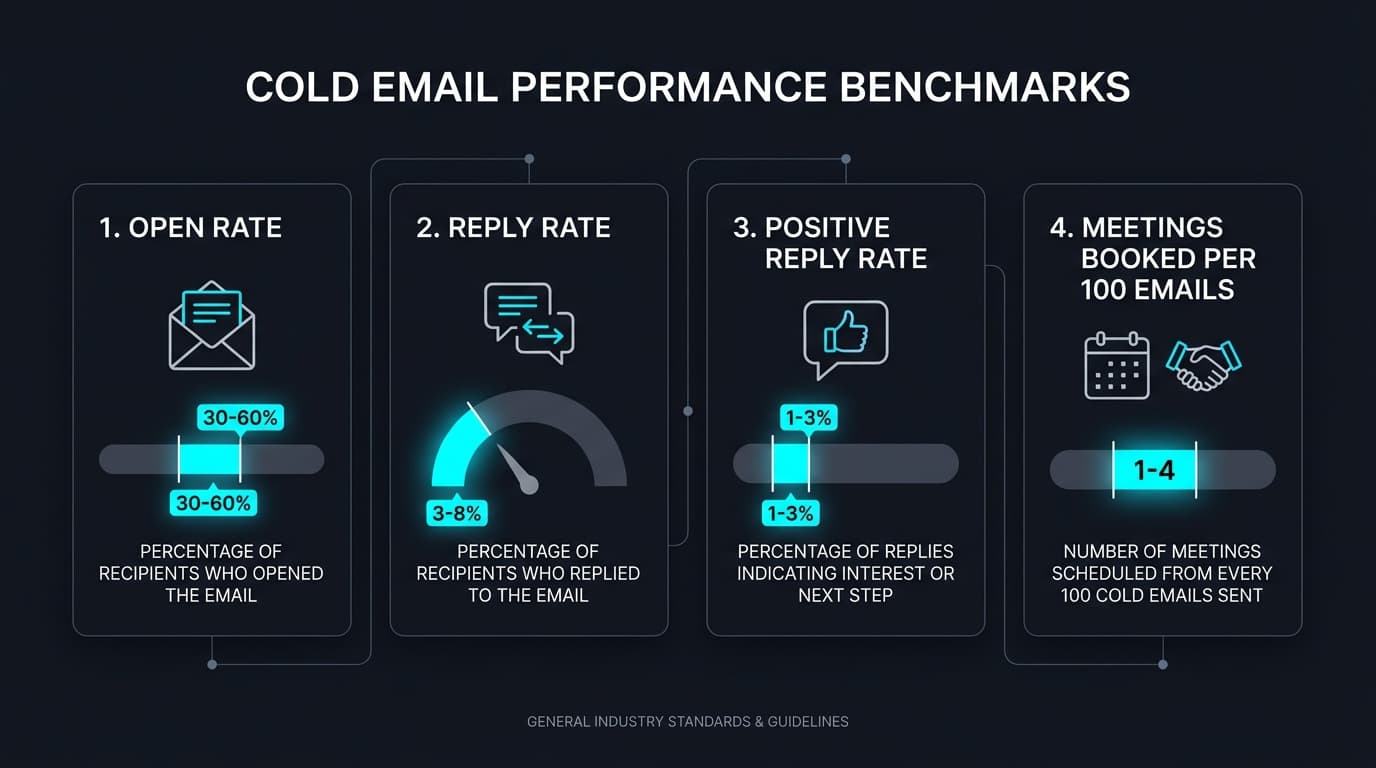
A good cold email reply rate for B2B outbound is 3–8% of emails sent. Above 8% means your ICP is tight, your personalisation is working, or you've hit a pain people are actively shopping to solve. Below 3% is a signal — either the ICP is too broad, the message isn't landing, or both.
The four cold email benchmarks worth tracking
Open rate: 30–60% for well-targeted outbound with solid deliverability. Below 20% is a deliverability problem — check SPF/DKIM, test a different sending domain. Above 60% usually comes from highly personalised subject lines that feel more like a direct message than a marketing email.
Reply rate: 3–8% of sent emails, combining positive and negative. Below 2% means the ICP or the message needs to be fixed — usually the ICP.
Positive reply rate: 1–3% of sent emails expressing genuine interest. A healthy ratio is 25–50% of total replies. If 6% reply and only 0.5% are positive, you're reaching the right companies but the wrong person, or you're leading with the wrong angle.
Meetings booked: 1–4 per 100 emails sent. High-ACV B2B with a tight ICP can hit 3–4. Broader ICPs land closer to 1–2. The number moves dramatically based on how well the list is built.
How to diagnose a low reply rate
Open rate is good but reply rate is low: the email body isn't working. Test a sharper pain angle, cut the copy in half, or give the CTA a specific ask instead of a generic “let me know if you're interested.”
Open rate is low: subject line or deliverability. Subject lines under six words tend to outperform longer ones. Check your SPF/DKIM records and test a fresh sending domain before assuming the subject line is the problem.
Reply rate is good but meetings are low: the message lands but the ask doesn't. Tighten the CTA to something low-friction — a 15-minute call, a yes/no question, a specific date. Vague asks get ignored.
Why a high reply rate can still mean dead pipeline
A high reply rate is useless if the replies are “not interested” or “we already use X.” Track positive reply rate separately from total reply rate. A 2% positive reply rate from a tight ICP produces more pipeline than an 8% total reply rate from a broad list. Volume is a distraction. Quality is the number that moves revenue.