Why most ICP definitions are wrong before they're written
Most ICP definitions describe who you'd like to sell to, not who actually buys. The gap between those two is where most outbound dies. Here's the specific ways ICP definitions go wrong and how to build one that actually reflects your buyers.
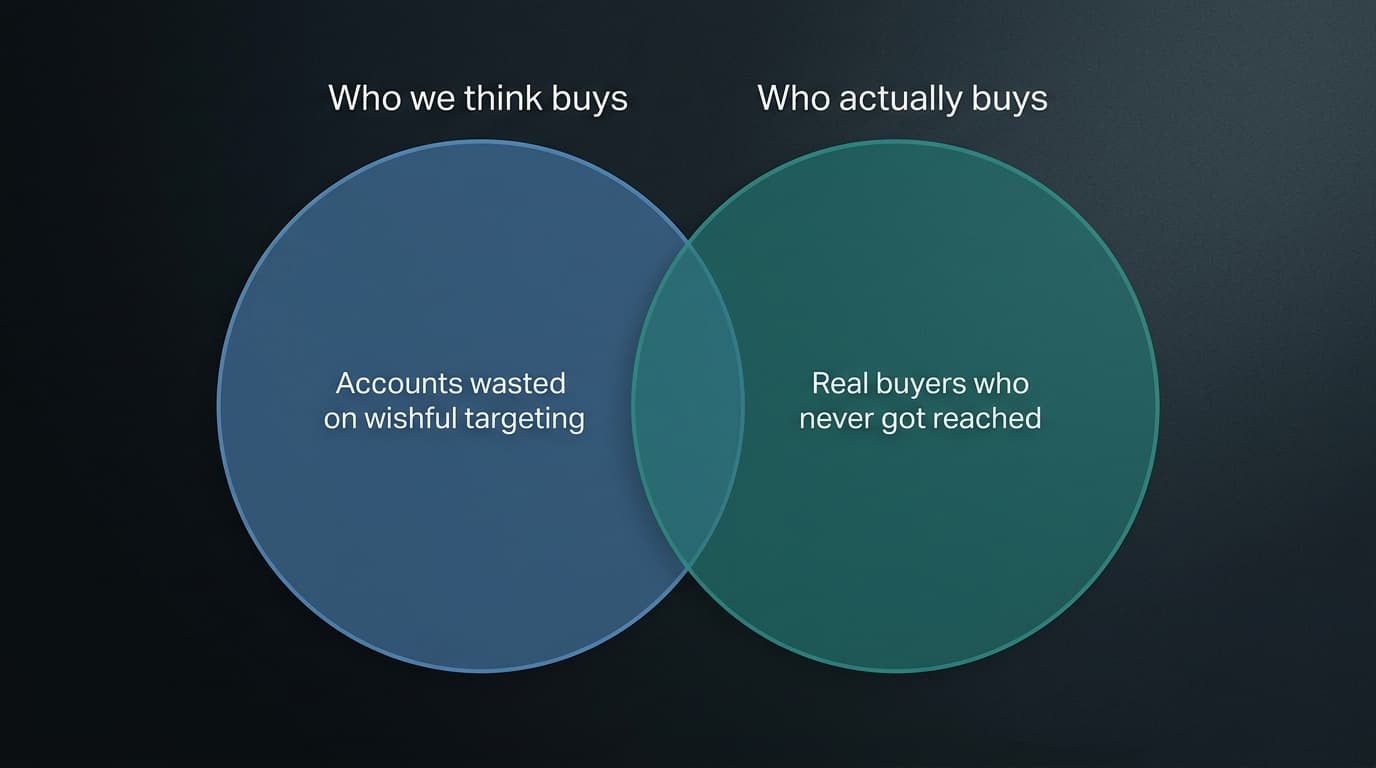
Most ICP definitions describe who the company would like to sell to, not who actually buys. They're built from aspiration — the enterprise logos the founder wants on the website, the verticals that sound strategically interesting — rather than from data about what the actual close pattern looks like. The outbound motion built on this ICP contacts the wrong people and returns low reply rates. The team concludes the messaging is wrong. The message is usually fine. The targeting is off.
How do most ICP definitions get built?
In a meeting. The founder and maybe a sales lead sit down and describe the ideal customer: industry, company size, job title, geography. The description reflects what the product could theoretically serve, not what it has demonstrably served. It's a reasonable starting point. The problem is when it stays a starting point for months without being updated against actual close data.
What are the most common ICP definition mistakes?
Too broad on company size. "50–500 employees" is not a useful range — a 50-person company and a 500-person company have completely different buying processes, budget authority, and decision-making timelines. In practice, the ICP is usually concentrated in a band 10x narrower than what's documented. Too vague on triggering situation. "Companies looking to improve their outbound" is a situation description, not a target segment. The useful ICP includes the situation that's driving urgency: "founder-led sales, no dedicated SDR, product has launched and is growing but pipeline is inconsistent." Wrong job title. Targeting the C-suite when the actual champion is a VP or Director — or vice versa. The title on the ICP is often based on who the founder thinks should care, not who actually replied and pushed deals through.
How do you build an ICP that reflects reality?
Start from closed-won accounts, not from a whiteboard. Pull the last 5–10 deals that closed. Look at the actual company profile — exact headcount, funding stage, industry sub-vertical, tech stack, whether they had existing outbound infrastructure or not. Find the pattern. "Every deal we closed was a B2B SaaS company with 20–60 employees, Series A funding, no SDR on the team, and the founder still on calls" is an ICP. "Mid-market B2B tech companies" is a category.
What happens when the ICP is wrong?
Reply rates stay flat regardless of how much messaging optimisation you do. You're sending perfectly good emails to people who were never going to buy. The signal is low reply rates even after message testing, plus a pattern of demos that don't convert because the qualified prospects in the pipeline don't actually match the problem the product solves. If messaging testing isn't moving reply rates, check the ICP before rewriting the message again.