Why GTM teams fail to sustain themselves
Most small B2B companies hit the same wall. They build a GTM team, but the team can't sustain itself without the founder holding the full context. Here's why that happens — and what it actually takes to fix it.
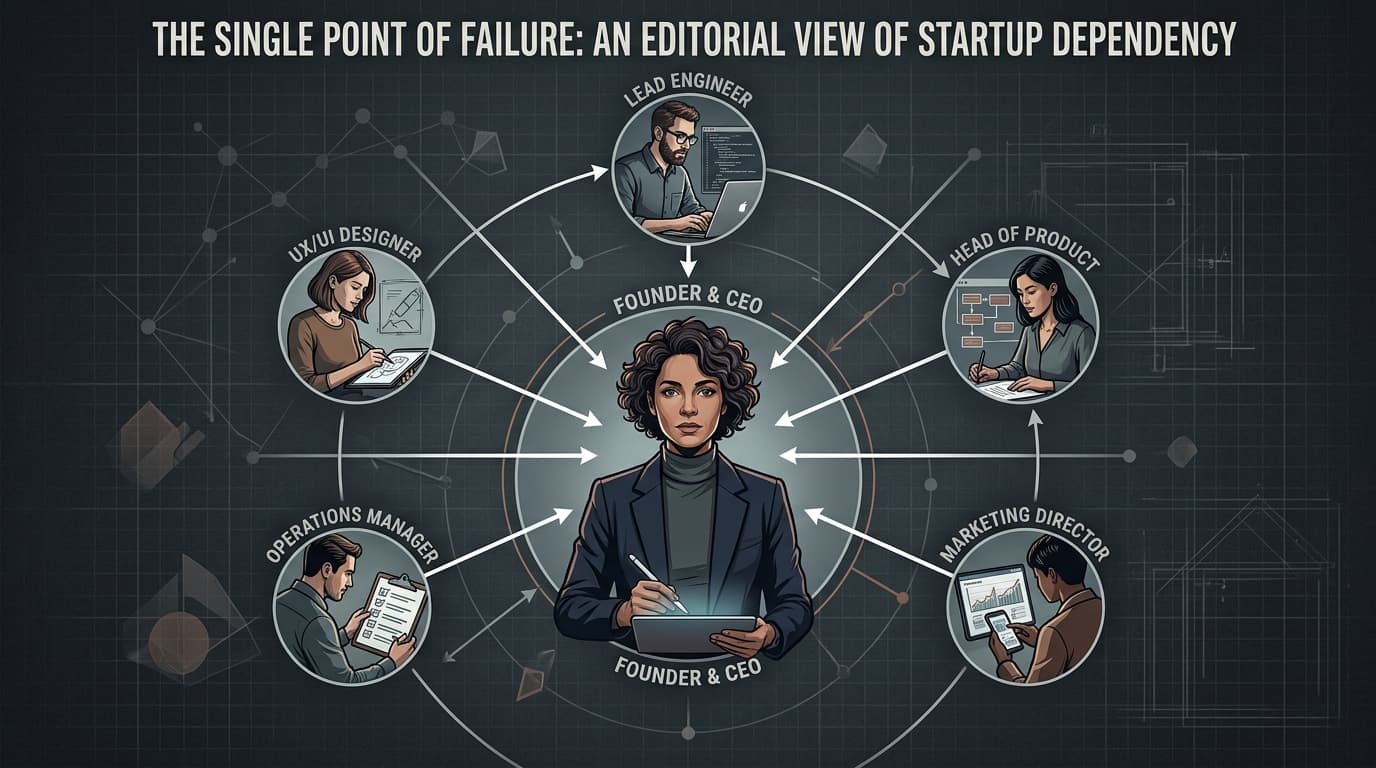
GTM teams fail to sustain themselves because the knowledge that makes them effective — who to target, what messaging works, how to handle objections — never leaves the founder's head. Not because the team is weak. Because no one built a system to capture and reuse what the team learns. That's the whole problem.
Not because the people are bad. Not because the tools are wrong. But because the knowledge that makes the team effective still lives entirely in the founder's head.
This isn't a talent problem. It's a structural one. And it plays out the same way almost every time.
Phase 1: The founder does everything
In the early days, founder-led GTM is the right answer. The founder knows the product, the customers, and what resonates. They close deals faster than anyone they'd hire. They're doing outreach, running demos, managing pipeline, writing content, overseeing ads — simultaneously.
This works. Until it doesn't. Every hour in GTM is an hour not in product. Every deal that needs a founder touch creates a bottleneck. The pipeline is capped by the founder's calendar.
Phase 2: The first hires don't fix it
So the founder hires. An SDR. A marketing person. Maybe an account executive. And for a moment, it looks like the problem is solved.
It isn't. What actually happened is the bottleneck shifted. The founder is now the architect — the single person holding the full context. Every new hire needs to be briefed. Every campaign needs to be approved. Every ICP refinement needs to flow from the founder to the team. When the founder steps out for a week, things stall. When someone leaves, the knowledge they built walks out with them.
The team is in the building. The team isn't in sync.
The real problem: knowledge doesn't compound
The tools are usually fine. CRMs store data. Sequencers send emails. Ad platforms run campaigns. The problem isn't the tools. It's that the institutional knowledge required to use those tools effectively — who to target, what messaging lands, how to handle objections, what the winning patterns are — never gets systematically captured and reused.
A manager coaches their SDR on Monday. By Friday, half of it is forgotten. The next sprint, the same coaching is needed again. Won deal patterns don't automatically inform the next outbound campaign. Customer objections don't automatically update the sales playbook. Every cycle re-learns from scratch.
A self-sustaining GTM team is one where knowledge compounds. What worked last quarter informs this quarter — automatically. Coaching sticks. The team gets sharper every cycle, not just more practiced at following a process the founder wrote six months ago.
Why tools don't solve this
The instinct when GTM feels broken is to add another tool. Better CRM. Better sequencer. Better attribution. AI features bolted onto the CRM you already have.
None of these fix the knowledge compounding problem. A CRM is only as good as the data entered into it — and small teams don't maintain the discipline to keep it current. AI features on a legacy CRM give you a faster path to acting on bad data. A better sequencer still requires a human to decide who to target and what to say.
The missing piece isn't a tool. It's a system that captures what the team learns and uses it to make the next cycle better — automatically, without a human in the middle copying outcomes back into the process.
What a self-sustaining GTM motion actually requires
First, execution has to run without prompting. Not when the founder asks for it, not in bursts when someone has capacity, but consistently every day. Outbound every morning. Follow-up on every warm lead. Ad optimisation every week.
Second, knowledge has to accumulate, not reset. What the SDR learns about which segments respond, what the AE discovers about which objections kill deals at the proposal stage, what the marketing manager confirms about which content actually moves pipeline — all of it has to survive the next hire, the next cycle, the next sprint.
Third, the loop has to close. Actions produce outcomes. Outcomes produce signals. Signals update the playbook. The next cycle starts already informed by what just happened — not by what someone remembered to document.
Most GTM teams nail the first inconsistently, hit the second only while the same people are still around, and almost never reach the third. The loop never closes. That's why the team can't run without the founder — not because the people are bad, but because nothing in the system preserves what they learn.