AI outbound for B2B SaaS: how to build a motion that compounds
B2B SaaS outbound has specific characteristics: technical buyers, longer sales cycles, and multiple stakeholders. Here's how to build an AI outbound motion that fits the SaaS buying process and compounds over time.
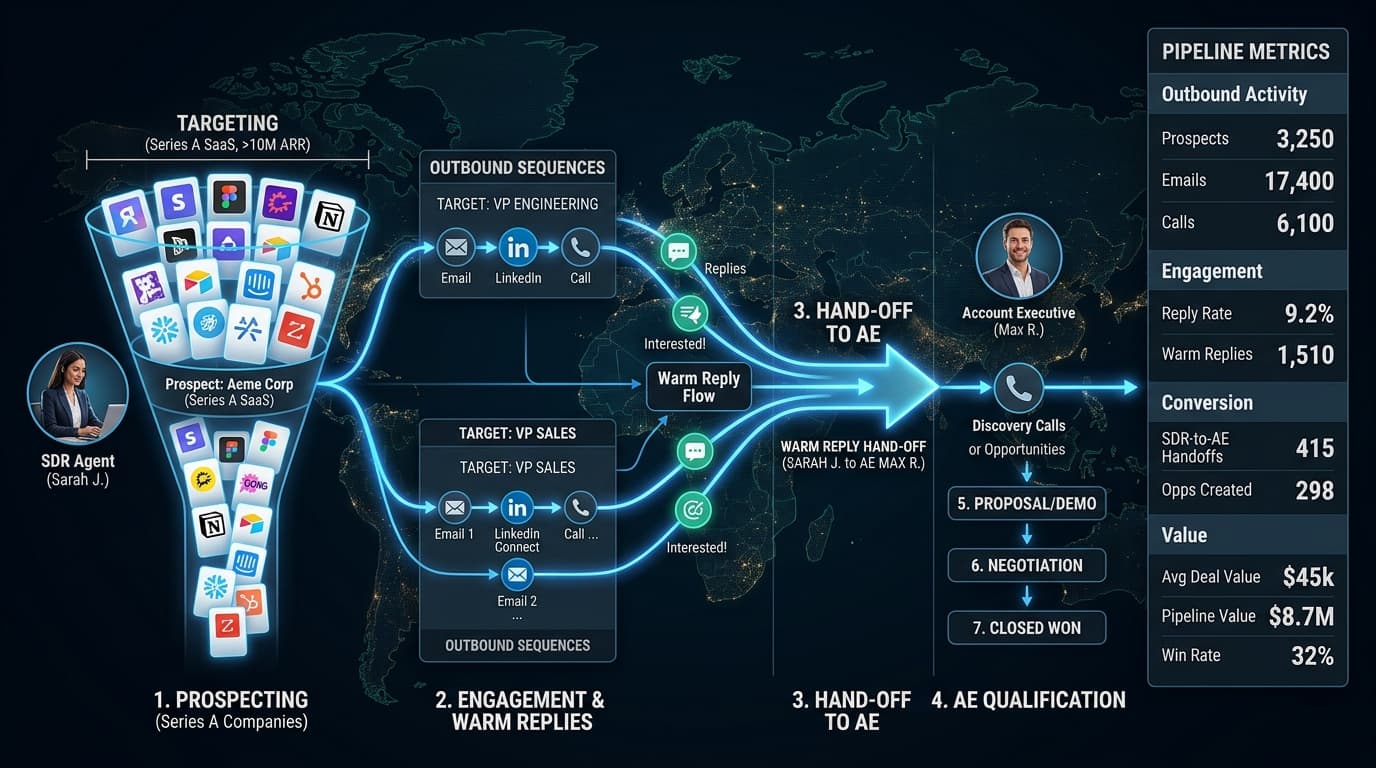
B2B SaaS outbound has a specific problem: the buyers are technical, they've read the playbooks, and they can spot a template in the first five words. Sales cycles run weeks, not days. Multiple stakeholders sign off. And the VP of Sales you're targeting got eight cold emails before lunch. Generic AI outbound fails here. A motion built around specific signals — stage, hiring intent, tech stack, role — does not.
Why "B2B SaaS" is not an ICP
"B2B SaaS" is not an ICP. It's a category with hundreds of sub-segments that behave nothing alike. Effective SaaS outbound requires specificity: stage (seed, Series A, Series B+), headcount band, sales motion (sales-led, PLG, hybrid), tech stack signals (tools they already run that indicate fit or active pain), and role signals. A VP Sales job posting means they're building a sales team. An SDR opening means they're scaling outbound. Those are real buying triggers, not firmographic guesses.
The tighter the signal, the higher the reply rate. "Post-Series A B2B SaaS, 30–150 employees, currently hiring their first SDR" is a targetable signal. The AI SDR searches for and scores against these criteria continuously — no analyst required.
Who actually makes the call at a SaaS company
For GTM tools, target VP Sales, Head of Revenue, or the Founder if the company is pre-Series A. If there's a VP Sales in seat, skip the Director — the decision won't happen below that level. For marketing tools, the right person is VP Marketing, Head of Demand Gen, or Marketing Director if VP Marketing doesn't exist yet. Getting this wrong means a well-written email goes to someone who can't say yes.
Multi-threading — reaching multiple stakeholders at the same account in parallel — works in SaaS because deals rarely move on a single champion. An AI AE runs multi-thread sequences and holds context across all of them, so the VP Sales email and the Head of Ops email don't contradict each other.
What actually lands with technical SaaS buyers
SaaS buyers respond to mechanism, not marketing. Don't say "improve your sales productivity." Say "your SDR runs a 60-minute heartbeat cycle — every cycle, it finds ICP-fit prospects, writes personalised outreach, and hands warm replies to your AE automatically." Specific mechanics earn credibility with technical buyers. Vague outcomes get archived.
How SaaS outbound compounds over time
SaaS outbound compounds in two distinct ways. First, ICP refinement: early outreach reveals which sub-segments reply faster and convert better. A post-Series A company with an active VP Sales search replies at 3–4x the rate of a bootstrapped tool with no dedicated sales function. Those patterns become targeting rules that tighten every future campaign.
Second, messaging refinement: which pain angle generates replies (growth pressure vs. coordination vs. knowledge walkout), which subject line format works for this audience, which step in the sequence drives the most responses. By month three, a well-instrumented AI outbound motion is running on learned signal — not assumptions made on day one.